
Thank you for Subscribing to Hospitality Business Review Weekly Brief
Hospitality Business Review: Specials Magazine
![Aramark [NYSE:ARMK]: Executing Hospitality at Scale Across Diverse Environments](https://www.hospitalitybusinessreview.com/newstransfer/upload/3004000-00dfw-n7qhz.jpg "Aramark [NYSE:ARMK]: Executing Hospitality at Scale Across Diverse Environments")
Hospitality is less about individual experiences and more about how reliably service is delivered across thousands of interactions each day. Whether in a hospital, a university campus or a large sports venue, expectations vary, but the requirement for consistency remains constant. Execution becomes the defining factor, shaping how service is perceived over time. In this environment, hospitality is not limited to front-facing engagement. It includes food preparation, facility upkeep, staffing coordination and operational planning, all working together to create a cohesive experience. Each element must function in alignment, ensuring that service delivery remains steady even as conditions change. Aramark [NYSE:ARMK] thrives in this landscape as a provider of food services, facilities management and hospitality programs across a wide range of environments. Its model centers on delivering structured service operations that align with the specific needs of each client setting while maintaining consistency across its broader network. From Service Provision to Operational Integration Hospitality services have traditionally been delivered through outsourced models, where providers handled specific functions such as catering or facility management. While this approach remains relevant, the scope of hospitality has expanded, requiring a more integrated operational framework. Organizations increasingly expect service providers to function as extensions of their operations rather than as external vendors. This requires alignment with internal processes, responsiveness to changing needs and the ability to maintain consistent standards across locations. Aramark reflects this shift by integrating multiple service functions within a single operational framework. Food services, facilities management and guest-facing programs are coordinated to ensure that each aspect contributes to a unified service environment. This reduces fragmentation and enables smoother execution across different functions. By aligning these elements, the company moves beyond isolated service delivery toward a model where operations are managed as a continuous system.
![ARAMARK [NYSE: ARMK]: Executing Hospitality At Scale Across Diverse Environments](https://www.hospitalitybusinessreview.com/newstransfer/upload/1-d34mu-.jpg "ARAMARK [NYSE: ARMK]: Executing Hospitality At Scale Across Diverse Environments")
Top Hospitality Linen Manufacturer 2026
What defines sustainability in commercial hospitality linen performance and lifecycle management today? At Quivera, Sustainability is defined by one outcome: how long its linen lasts in real commercial use, without ever compromising the luxury experience expected in high-end hospitality. Linen in Hospitality moves through continuous wash, use and replacement cycles. Each replacement increases water consumption, energy use, chemical discharge and material waste. When the lifecycle shortens, both environmental impact and operating cost rise. Quivera builds its model by addressing that cycle directly. Recognized as the Top Hospitality Linen Manufacturer 2026, it engineers products to withstand repeated industrial laundering, reducing replacement frequency and total resource consumption over time. “Sustainability is number one for us. It sits above profitability and even service in how we define our work,” says D. Michael Painter, President. What sets that approach apart is that durability is achieved without compromising the guest’s sleep experience. The same focus on material and finishing preserves the linen’s visual sheen, the softness driven by yarn quality and finishing techniques and the cooling effect created by high absorption and wicking capacity. Together, these factors ensure the linen remains cool to the touch and delivers a sleep experience guests immediately recognize..

Top Hotel Ownership and Management Company 2026
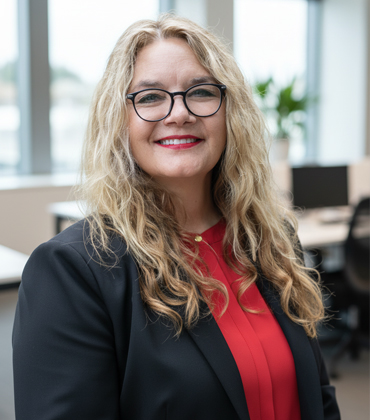
What operational challenges do small and mid-size hotel owners commonly encounter today? For many small- to mid-size hotel owners, staffing critical roles full-time is harder than keeping up with day-to-day operations. Revenue management, sales, accounts receivable, and guest service recovery demand specialized expertise, leaving owners to either stretch themselves across these roles or operate without consistent support. This gap between operational requirements and available resources continues to limit how effectively smaller properties can maintain performance and execute consistently. Filling this operational gap, ROI Hotel Consulting works alongside hotel owners to extend capabilities where dedicated in-house resources are often limited. The company operates as a fractional operations partner, providing experienced leadership across revenue management, sales, and core hotel operations, including accounts receivable, marketing, and customer service. This structure enables access to senior-level expertise without the cost of full-time hires, whether integrated into the owner’s team or delivered end-to-end. “We tailor our involvement to each property, ensuring owners have the right level of support across the functions that matter most,” says Darla J. Rosenfield, owner, consultant. “That flexibility is the true beauty of what we offer.” How does a fractional operations model provide flexibility and expertise for hotel owners? Unlike traditional consulting models that focus primarily on recommendations, ROI Hotel Consulting is built on execution. It offers a modular, build-your-own approach that lets owners access only the support they need. The team works directly within hotel operations to implement pricing strategies, build local sales pipelines, and improve guest experience processes, delivering measurable impact rather than theoretical plans. This approach becomes particularly valuable in situations where continuity and coverage are not always guaranteed. For many owners, the challenge isn’t just performance; it’s the constant pressure of managing every function without experienced, dedicated support. The company steps in as an extension of ownership and the on-site team to alleviate that burden. For example, during year-end travel to India, owner-operators rely on the consulting team as a temporary point of contact to handle guest service issues and operational needs, ensuring continuity during their absence. Some owners choose to learn and execute these functions themselves, while others rely on the team to manage them fully, offering flexibility based on each owner’s preferences. In either case, the team provides guidance or takes full ownership of tasks like prospecting accounts, managing pricing strategies, and responding to customer feedback. .
Hotel Mattress Recycling Services Company of the Year 2026
What logistical challenges arise during large-scale renovation material removal and coordination? LRP Recycling operates as a full-service partner for hotels, universities and large institutions, managing renovation projects, integrating removal, logistics coordination and material recovery into a single coordinated structure. In large-scale renovation projects, thousands of mattresses, furniture pieces and electronic items must be removed, transported and processed within tight timelines while the property remains operational. This creates a complex operational environment that requires careful coordination. LRP Recycling manages removal and logistics in line with renovation schedules and on-site constraints. At this scale, materials are removed in phases, staged on site and transported in planned cycles to maintain a steady flow of work. Staging areas and load-out points are organized in advance to manage how materials move through the site during each phase. This sequencing allows work to continue in active areas of the property while cleared areas move into the next stage of renovation. This approach developed over time as the company took on larger and more demanding projects. It began with two people working out of a basement, handling small removal jobs and building relationships one project at a time. As the scale of work increased, the team encountered the operational challenges that came with coordinating work across multiple vendors and project phases..

Top Wedding Venue Services 2026

Couples planning weddings often struggle to balance personal expression with the demands of coordination, budgeting and guest experience. Creating an event that feels meaningful while managing logistics can quickly become overwhelming, particularly in destination markets where expectations are high and timelines are tight. Lovegrove Estate addresses this challenge by structuring its venue around both emotional impact and logistical clarity. Set on private waterfront property surrounded by mature oak trees, the estate provides a natural setting that supports personalization without requiring extensive design intervention. “We are not simply a space, we are an experience rooted in place, beauty and thoughtful coordination,” says Andrea Lovegrove, founder. Creating Flow Through Environment and Design One of the most consistent concerns couples bring forward is how to make their wedding feel personal while managing multiple moving parts. Many also face pressure to deliver a memorable experience without exceeding budget constraints. Lovegrove Estate approaches this by allowing the natural setting to carry much of the visual experience. Waterfront views and oak canopies reduce the need for excessive décor, enabling couples to focus on intentional design choices rather than volume. The layout of the estate also supports a structured event flow. Ceremonies beneath the oaks transition naturally into waterfront cocktail hours and then into reception spaces, whether outdoors, tented, or indoors. This progression creates a cohesive guest journey without requiring complex reconfiguration between stages..
Top Travel Spend Optimization Solutions 2026
Travel management companies (TMCs) operate in a complex and demanding environment where operational efficiency plays a critical role. Many organizations manage a combination of legacy systems, manual processes, and high service expectations, all while navigating tight margins. These challenges can absorb time and resources that could otherwise be directed toward innovation, service enhancement, or client engagement. As pressures continue to build across the industry, finding ways to improve efficiency without compromising service has become an increasingly important part of staying competitive. Oversee was built specifically to address this reality. Its core mission is simple but critical: to empower TMCs unlock meaningful savings and operational efficiency, so those gains can be reinvested into better service, stronger relationships, and more competitive offerings. For more than 11 years, the company has served TMCs and travel buyers as a behind-the-scenes operational partner. It embeds directly into existing workflows and technology stacks, enabling savings and automating workflows without disrupting travelers or agents. At the center of its platform is a customer-centric mandate to help TMCs deliver more value to travel buyers - without changing how they travel. Oversee’s AI-based air and hotel reshop technology continuously monitors bookings after purchase, identifying opportunities to secure lower prices without altering itineraries or creating friction. Often referred to as travel price assurance, this capability remains a primary reason companies turn to Oversee. Crucially, reshop does not operate in isolation. It is supported by a real-time analytics suite that audits negotiated rates, sourcing performance, and contract utilization. By comparing agreed pricing against actual booking behavior, Oversee helps TMCs and travel buyers ensure that negotiated programs deliver measurable value in practice..
Resort Management Services

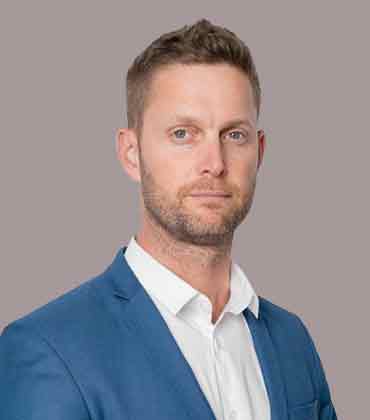
Capital Vacations is a full-service resort management company dedicated to supporting independent vacation ownership properties. With expertise spanning financial planning, operations, rental and sales and marketing, the company delivers tailored strategies designed to improve performance and ensure long-term stability. By collaborating with general managers, boards of directors and on-site teams, Capital Vacations provides customized solutions that honor each resort’s unique identity while strengthening its operations. Today, the company serves nearly 200 vacation ownership resorts across the United States, Mexico and the Caribbean. Its support ranges from day-to-day operational guidance to robust revenue programs, including a competitive rental distribution network and a proven club sales platform. These initiatives convert underperforming intervals into active ownership, improve cash flow and help properties grow stronger and more resilient. A Partner Built for Independents Unlike large branded operators where the brand dictates the guest experience, Capital Vacations takes a different approach. Its model allows independent vacation ownership resorts to retain their individuality while benefiting from the operational and marketing capabilities of a major hospitality company. “In a brand environment, the brand comes first. In our model, the independent resort comes first, supported by the strength of Capital Vacations,” says Gary Hyde, Executive Vice President of Hospitality. Capital Vacations’ portfolio consists of vacation ownership resorts, giving the company a deep understanding of the challenges and opportunities in this segment. Alongside core services such as reservations, financial management, administration and IT, the company distinguishes itself in two key areas: Rental Distribution: Through its proprietary global system and consumer-facing platform Vacation Escapes, combined with partnerships with leading online travel agencies, Capital Vacations helps resorts increase visibility, fill inventory and generate immediate rental revenue.
CXO INSIGHTS
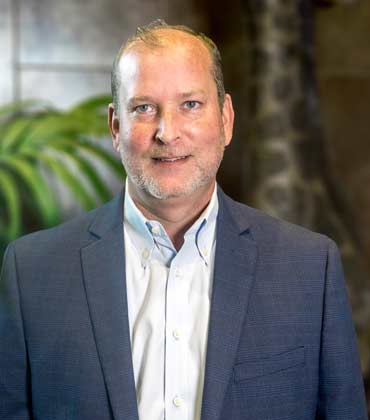
Kalahari Resorts & Conventions Innovates the Catering Industry, One Event at a Time
Christopher Hammond, Corporate Director of Food & Beverage, Kalahari Resorts & Conventions
Challenges To Data Analysis In Hospitality Industry
Mike Kuzmar, Vice President of Revenue Analytics, First Hospitality

Laying The Groundwork For Strategic Procurement For Efficiency And Innovation
Molly Preston, Vice President of Procurement, Pyramid Global Hospitality

Shaping Guest Loyalty Through Hospitality Marketing
Melissa A. Radovich, Vice President of Marketing, Landry’s

Stop Selling Food. Start Selling Belonging.
Kimberly Zicopula, Director of Marketing and Public Relations, HOUSEpitality Family

IN FOCUS


Redefining Linen: Sustainable Practices and Customization in Hospitality
Hospitality linen manufacturers are advancing through sustainable materials, efficient production, and customized solutions to meet evolving quality, durability, and operational expectations.
EDITORIAL
Execution as the Operating Standard
Operational consistency is becoming the benchmark for hospitality performance across environments. In this edition of Hospitality Business Review, the focus shifts to execution at scale rather than isolated service moments. As complexity increases, integrated operations, supply chain discipline and embedded sustainability are shaping outcomes. Organizations are responding by aligning systems, not just functions, to maintain reliability, manage risk and deliver measurable performance.
At the core of this issue, Aramark, recognized as the Top Hospitality Management Services 2026, demonstrates how execution at scale is structured through integrated operations. Its model aligns food services, facilities management and guest programs within a unified framework, enabling consistency across healthcare, education and sports environments while balancing standardization with local adaptability.
Within operational workflows shaping hospitality infrastructure, LRP Recycling, recognized as the Hotel Mattress Recycling Services Company of the Year 2026, structures renovation logistics to maintain project continuity and material recovery. Quivera, recognized as the Top Hospitality Linen Manufacturer 2026, extends the product lifecycle to reduce replacement frequency while maintaining guest experience standards. ROI Hotel Consulting, recognized as the Top Hotel Ownership and Management Company 2026, addresses operational gaps through execution-led, fractional support models that deliver measurable improvements in pricing, sales and service performance.
Decision-making in hospitality is increasingly defined by structure and timing. Melissa A. Radovich, Vice President of Marketing at Landry’s, emphasizes aligning data with creative execution to build guest loyalty, while Jocelyn Lurie, Vice President of Procurement at Throughline by IIG, positions procurement as an upstream function that mitigates risk through early engagement and transparency.
Execution frameworks define long-term resilience in hospitality by aligning operations, procurement, and sustainability within structured systems to maintain control amid growing complexity. Consistency now comes from coordination and disciplined execution, not scale alone. We invite readers to explore these insights and assess how they can be implemented within their own operational environments.
